Morocco’s Mediterranean Coast


Morocco’s Mediterranean Coast

If you  planning to go to Morocco in mid May. Apart from travelling around i would like to stay a week at the sea side with sunbathing and swimming in the sea. I know already that the sea temp for example in Agadir is around 17 degrees in mid May which is too cold for me :). What about mediterranean coast is there any chance the the sea will be warmer there? Do you know any budget resorts there?
As the largest lagoon on Morocco's Mediterranean southern shore, rich in natural beauty and biodiversity, Marchica lagoon is ideally suited for the eco-tourism development that was recently inaugurated by the King of Morocco, Mohammed VI. In a ceremony that took place on 1 December 2012 in Nador, the King launched the Marchica Lagoon project, which will eventually cover an area of more than 2,000 hectares and feature seven separate zones including residential housing, extensive tourism accommodation, retail facilities, entertainment infrastructure, a golf course and ornithological park.

The agency appointed to oversee the development is committed to preserving the natural landscape and ecology of the lagoon and surrounding dunes – part of the spectacular natural heritage of this exotic North African destination – and to using environmentally proven construction techniques. Renewable energy in the form of solar and wind generated power, will be implemented, and waste water will be recycled. The first two sites to be developed will be Cité des Deux Mers (City of Two Seas) and the Atalayoun Golf Resort, with a village-marina following after that. Construction of Le Village des Pêcuers (The Fishermen’s Village) is scheduled to start in 2014 with a finish date of 2018. La Baie de Flamands (The Flamingo Bay) should start construction in 2015, with development of the Marchica Sport site planned for 2017. The final phase of the Marchica Lagoon development will be Les Vergers de Marchica (The Marchica Orchards), beginning in 2019.
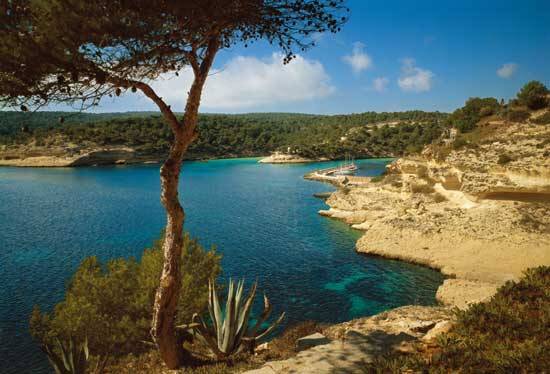
Two strips of sandbank separate the semicircular lagoon from the Mediterranean Sea. To the north is the 10 km long strip called Boukana, with the 12.5 km strip of sand to the south known as Aljazeera. The mouth of the lagoon is around 120 meters wide. The cities of Nador, Beni Ansar and Kariat lie on the lagoon's shoreline, with the Spanish enclave of Melilla a few kilometers to the north. Home to a wide variety and vast numbers of waterbirds, Marchica was listed as a Ramsar site in January 2005 and is also listed as important to birds by BirdLife International, while being recognized by Moroccan authorities as being a Site of Biological and Ecological Interest (SIBE). No doubt the combination of natural beauty and world class facilities will make Marchica Lagoon a popular destination for visitors to Morocco.


morocco culture,moroccan food,morocco food,moroccan cuisine,morocco beaches,moroccan meal,beaches in morocco,moroccan culture,hercules cave,hercules cave morocco

A Language of Morocco

A Language Problem Case Study of MoroccoExpanding on yesterday's question of why illiteracy remains a pertinent problem in Morocco, I created this case study that examines Morocco's language problem.
Let's take a look at the linguistic barriers facing two hypothetical children growing up in Morocco. The first one, we'll call Simo. He's from an Arabic speaking part of Morocco and represents the 56% of Morocco's urban population. The second one is Ito. She's from the High Atlas Mountains and speaks Tamazight, one of the Amazigh dialects. She represents Morocco's rural population.
Toddlers

  • Simo speaks Darija, the oral Moroccan Arabic dialect at home with his family. As it is only an oral language, it is not an official language of Morocco.
  • Ito speaks Tamazight with her family. This is one of three Amazigh dialects in Morocco but is still not an officially recognized language.

Primary School
  • Simo is taught in Fuhsa, or Modern Standard Arabic. All the textbooks are written in Fuhsa as is the Qu'ran. He begins learning how to read and write using the Arabic script.
  • Ito may be taught either in Fuhsa or in Tamazight. In 2003, the government issued a new script, called Tifinagh which would be used to transcribe the three Amazigh dialects. It does not resemble the Arabic or Latin scripts and is read from left to right. Ito begins to learn how to read and write using theTifinagh script even though her older brothers and sisters never learned it, nor did her parents.

Secondary School
  • Simo now speaks Darija at home with his friends and family. At school his studies are taught in Fuhsa and he reads and writes the Arabic Script. In high school, he will begin to take French classes, which, besides Arabic, is the other official language of Morocco. With this new language, he will learn to read and write using the Latin Script.
  • Ito now speaks Tamazight at home with her friends and family. She is taught in Fuhsa and/or Tamazight, so she probably reads and writes both using theArabic script and the Tifinagh script. If she makes it to high school, she will probably start to learn either French or English at which point she's going to have to figure out the Latin script.

If both Simo and Ito have made it through high school, they probably have various levels of fluency in several of Morocco's main languages: Darija, Fuhsa, Tamazight, and French. As both Darija and the Amazigh dialects are essentially oral languages, they are mostly spoken and rarely written; Fuhsa, on the other hand, is just the opposite-- it is written and studied, but rarely spoken in Morocco
So now you can imagine what kind of struggle these two children have gone through just to get this far. They may come from different regions of Morocco and from families of different socio-economic status, however they are still facing the same predicament: they must attain literacy in a society that celebrates numerous languages but has yet to master a single one.
By the time they get to University, if they're still trucking and want to add one more notch on their belt, they may choose to study English.


morocco culture,moroccan food,morocco food,moroccan cuisine,morocco beaches,moroccan meal,beaches in morocco,moroccan culture,hercules cave,hercules cave morocco

Moroccan Languages


Moroccan Languages

Morocco is a bilingual country with Arabic and French as official languages. Arabic is widely spoken by common masses while French is taught in schools. Therefore, French is extensively used in government, business and elite circles. In the city of Casablanca, English is well known and widely used. Spanish is quite popular in the north of Morocco. More than 40% of the Moroccans are of Berber origin. Though Berbers got converted to Islam eventually, their ethnic and linguistic affiliations have remained with them till this day. Therefore, Berber dialects such as Tachelhit, Tamazight and Tarifit are widely used in Morocco, even in journalism and mass media.


Though most of us are not born linguists, striving to achieve even a small level of communication between ourselves and the inhabitants of the country we are visiting can be a most rewarding endeavor. Because of the varied historical influences on the people of Morocco, there is a large variety of languages spoken throughout the country. In order to help you in your pursuit to communicate better, we have provided a list of these languages.

Communicating to some degree in one of the nine living languages still spoken in Morocco can greatly enhance your experiences in the country. When Moroccans note your attempts to communicate, they are often treat you quite differently are become much more friendly and helpful. Thus, a world of adventure becomes opened to you, simply because you put a little effort into it.

Fortunately for us, most Moroccans are capable of speaking more than just one of their native languages. At least half of the country's population is capable of speaking French and many of those involved in the tourism industry are capable of speaking some English and a few other foreign languages as well. This means you should be able to get by in most parts of the country quite easily without even trying very hard. But if you really want to open doors or have a less frustrating adventure, you should really try to speak a little Arabic or French.

There are several different forms of the various languages spoken in Morocco, as well as a few that are non-verbal. The following is a breakdown of the 11 listed languages that are or were spoken in Morocco:

Living Languages
Moroccan Arabic - This is the official language of Morocco. Though it is somewhat different from most other types of Arabic, most Moroccans can understand conventional Arabic.

Hassaniyya Arabic - Also known as Moor. Over 40 000 in Southern Morocco people speak this form of Arabic.

Judeo-Moroccan Arabic - Only about 8 925 people speak this form of Arabic. It is generally confined to certain small areas in Morocco.

Standard Arabic - Most Moroccans can understand this form of Arabic which is spoken and written much throughout the rest of the Middle East and North Africa. Most Arabic television programs are in this form of Arabic.

Moroccan Sign Language - There is a large number of deaf men who speak sign language in the city of Oujda. It is hard to determine how many women are capable of sign language as they do not speak it in the streets. There are a few small deaf schools which teach the language though it is not generally used in Rabat, Tangier and Casablanca. Most people who use MSL cannot read or write Arabic. MSL is very different from American Sign Language and people conversant in the two sign languages would struggle to understand each other.

Spanish - Over 20 000 people in Morocco are capable of speaking Spanish. Besides being only a short distance away, Spain also acted as a protectorate of Morocco for a while after 1912. This resulted in Spanish influence in culture and language.

Tachelhit - 3 to 4 million of the people of Morocco speak this form of Berber.

Central Atlas Tamazight - This is also spoken by roughly 3 million of the inhabitants of Morocco. It is a dialect of Berber.

Tarifit - a lesser used dialect of the Berber language. It is spoken by about 1.5 million people in Morocco.

Extinct Languages
Ghomara - was a dialect of Berber which is generally considered to no longer be in use.

Senhaja de Srair - this is the fifth dialect of Berber which has also unfortunately fallen into disuse.

Other Languages
French - though not seen as an indigenous language in Morocco, at least half of the population is capable of speaking it. This is due to the strong French influence during the period of 1912 to 1956, which has also left a large amount of French architecture in parts of Morocco.


morocco culture,moroccan food,morocco food,moroccan cuisine,morocco beaches,moroccan meal,beaches in morocco,moroccan culture,hercules cave,hercules cave morocco

Morocco Cultural Overview

Morocco Cultural Overview

As an Islamic country, Morocco stands out distinctly for a significant reason. Due to the bold and strenuous efforts by King Mohammed VI, Islam in Morocco is rapidly turning out to be a tool to modernize and democratize the country. A revolutionary effort is on the way to reinvent the religion with a tolerant interpretation of the Koran. To aid this mission, the government has launched a website, a radio and a TV channel. Apart from this, religious dialogues are also held inviting the participation of elite public and religious heads. The recent efforts of the government strive to fuse Islam, modernization and civil rights.


The Kingdom of Morocco is the most westerly of the North African countries known as the Maghreb - the "Arab West". It has Atlantic and Mediterranean coastlines, a rugged mountain interior and a history of independence not shared by its neighbours.

Its rich culture is a blend of Arab, Berber, European and African influences.

Tiles in Marrakesh
Marrakesh is famed for its architecture
Morocco was a French protectorate from 1912 to 1956, when Sultan Mohammed became king. He was succeeded in 1961 by his son, Hassan II, who ruled for 38 years and played a prominent role in the search for peace in the Middle East.

He also ruthlessly suppressed domestic opposition. A truth commission set up to investigate human rights violations during his reign confirmed nearly 10,000 cases, ranging from death in detention to forced exile.
Hassan's son and successor in 1999, Mohammed VI, is a cautious moderniser who has introduced some economic and social liberalisation. In 2011 he revised the constitution in response to "Arab Spring" protests, and appointed a new government in January 2012. Powerful trade unions waited until May to launch mass protests against the authorities' failure to meet democratic and economic expectations.


The status of Western Sahara remains unresolved. Morocco annexed the territory in 1975 and a guerrilla war with Algerian-backed pro-independence forces ended in 1991. UN efforts have failed to break the political deadlock.

Kasbah of Oudayas in Rabat
The Kasbah of Oudayas in Rabat
To the north, a dispute with Spain in 2002 over the tiny island of Perejil revived the issue of the sovereignty of Melilla and Ceuta. These small enclaves on the Mediterranean coast are surrounded by Morocco and have been administered by Spain for centuries.

Morocco has been given the status of non-Nato ally by Washington, which has praised its support for the US-led war on terror. After deadly suicide bombings in Casablanca in 2003, Morocco launched a crackdown on suspected Islamic militants.


morocco culture,moroccan food,morocco food,moroccan cuisine,morocco beaches,moroccan meal,beaches in morocco,moroccan culture,hercules cave,hercules cave morocco

The best beaches in Morocco


The best beaches in Morocco


One of the exotic destinations that we have closer to our country is Morocco, a genuine wonder at each of its corners. Located in the North of Africa and its coasts, giving both the Atlantic Ocean and the Mediterranean Sea, there you can find not only cities with a lot of charm but also deserts, valleys, mountains and beaches.

Today we’d like to write about some of the beaches that can be found in Morocco, in which you can enjoying a dip virtually year-round since it almost always makes good time. Takes note of the most interesting:


Legzira Beach

It is one of the most beautiful beaches around the country, with spectacular red sandstone cliffs and rock formations in the shape of arches that are precious. Being something remote not tends to be very crowded, so it’s perfect for a day of rest.

Agadir Beach

Agadir beach is, without a doubt, one of the most spectacular beaches you can find not just in Morocco but in the Atlantic Ocean. It is a very crowded beach town is also lovely, and there is a great atmosphere both during the day and during the night.

Moulay Bousselham

It is in the North of the country and is one of the most economical destinations. It is very close to the port of Larache and in its surroundings there is a very interesting camping area where you can camp for very low prices. It is a perfect beach for surfing enthusiasts, and one of the best things that has is that it is next to the Merdja Zerka National Park, one of the most beautiful in the country.

Essaouira Beach

Here you can practice kitesurfing, surfing and windsurfing, as well as walks in camel or enjoy the old city walls that are in the area. In the Medina of Essaouira there are lots of shops that sold very interesting handicraft items.


morocco culture,moroccan food,morocco food,moroccan cuisine,morocco beaches,moroccan meal,beaches in morocco,moroccan culture,hercules cave,hercules cave morocco

silk kaftan

The finalists of Miss Belgium presented a magical show at Mazagan with a parade Caftan. After the controversy over photos lead mosques in Casablanca and Rabat, these lovely ladies gave us like to apologize for this mistake, this show in Moroccan caftan.

Moroccan Economy


Morocco’s economic freedom score is 59.6, making its economy the 90th freest in the 2013 Index. Its score is 0.6 point worse than last year, with large declines in the control of public spending and trade freedom that outweigh gains in investment freedom and labor freedom. Morocco scores about the world average and is ranked 9th out of 15 countries in the Middle East/North Africa region.

Morocco’s steady improvement in economic freedom has come to a halt. Critical development challenges include lingering widespread corruption and relatively high government spending. Budget deficits continue, and public debt has surpassed 50 percent of GDP. Undermining ongoing anti-corruption efforts, the judicial system remains inefficient and vulnerable to political influence.

By and large, Morocco has taken steps to integrate its economy into the global marketplace. The economy performs relatively well in investment freedom and business freedom. Procedures for conducting a business have become streamlined, and foreign investment is generally welcome in many sectors, although the investment regime needs more transparency to spur dynamic growth.


BACKGROUND

Morocco, a constitutional monarchy with an elected parliament, has been a key Western ally in the struggle against Islamist extremism. King Mohammed VI responded to popular calls for democracy and protests against corruption and high food prices by authorizing a commission to propose amendments to the constitution. Those amendments, designed to increase the power and independence of the prime minister, as well as protections for human rights, were approved in a July 2011 referendum. The Justice and Development Party won a plurality in the November 2011 parliamentary elections and became the first Islamist party to lead a Moroccan government, although the king, who is the chief executive, retains significant power. Morocco has a large tourism industry and a growing manufacturing sector, but agriculture accounts for about 20 percent of GDP and employs roughly 40 percent of the labor force.

RULE OF LAWVIEW METHODOLOGY

Property Rights40.0 
Freedom From Corruption 34.0
Private ownership is permitted in all sectors except for a few, like phosphate mining, that are reserved for the state. With few exceptions, private entities may freely establish, acquire, and dispose of interests in business enterprises. The judiciary is influenced by the king, and adjudication of cases can be slow. A new government that took office in 2012 pledged to make the fight against corruption one of its key priorities.

LIMITED GOVERNMENTVIEW METHODOLOGY

Government Spending64.3
Fiscal Freedom71.4
The top income tax rate is 38 percent, and the top corporate tax rate is 30 percent. Other taxes include a value-added tax (VAT) and a gift tax. The overall tax burden equals 22.8 percent of GDP. Government spending has increased to 34.5 percent of total domestic output. The budget has been in deficit, and public debt has climbed to over 50 percent of GDP. High youth unemployment has prompted increased government spending to create jobs.

REGULATORY EFFICIENCYVIEW METHODOLOGY

Business Freedom76.4
Labor Freedom30.1
Monetary Freedom78.9
Procedures for setting up private enterprises have been further streamlined. Launching a business takes six procedures and 12 days, and no minimum capital is required. However, the cost of completing licensing requirements is still over twice the level of average annual income. Labor market rigidity continues to discourage dynamic job growth. Monetary stability has been maintained with relatively modest inflation.

OPEN MARKETS VIEW METHODOLOGY

Trade Freedom70.8
Investment Freedom70.0
Financial Freedom60.0
The trade-weighted average tariff rate is 7.1 percent, and inefficient customs procedures further increase the cost of trade. Foreign investment is welcome, but sector restrictions continue, particularly in areas where the state maintains a monopoly. The financial sector is fairly well developed in comparison to other economies in the region, with banking intermediation increasing gradually. Credit costs remain relatively high.

morocco culture,moroccan food,morocco food,moroccan cuisine,morocco beaches,moroccan meal,beaches in morocco,moroccan culture,hercules cave,hercules cave morocco