Cooking tajines


A tajine or tagine(Arabic: طاجين tajin from the Persian: تابه‎ tabe) is a historically Berber dish from North Africa that is named after the special earthenware pot in which it is cooked. A similar dish, known as tavvas, is found in the cuisine of Cyprus. The traditional tajine pot is formed entirely of a heavy clay, which is sometimes painted or glazed. It consists of two parts: a base unit that is flat and circular with low sides and a large cone- or dome-shaped cover that sits on the base during cooking. The cover is designed to promote the return of all condensation to the bottom. With the cover removed, the base can be taken to the table for serving. Tajines are also used and made in Morocco.
More recently,[when?] European manufacturers have created tajines with heavy cast-iron bottoms that can be heated on a cooking stove to a high temperature.[citation needed] This permits the browning of meat and vegetables before cooking.
A tagine is a unique type of ceramic or clay cookware that's popular in Morocco. The bottom is a wide, circular shallow dish used for both cooking and serving, while the top of the tagine is distinctively shaped into a rounded dome or cone.
The word "tagine" also refers to the dish which is slow-cooked inside the cooking vessel. Typically, a tagine is a rich stew of meat, chicken, or fish, and most often includes vegetables or fruit. Vegetables can also be cooked alone. Although tagines are traditionally made of clay or ceramic, some Western cookware companies are now making tagines from other materials. The use of ceramics in Moroccan cooking is probably a Roman influence. Romans were known for their ceramics, and likely brought that tradition to their rule of Roman Africa.
Ceramic tagines are exquisite examples of Moroccan artisanship, and many are show pieces as well as functional cooking vessels. Some tagines, however, are intended only to be used as decorative serving dishes.
Unglazed clay tagines are favored by some for the unique earthy nuance they impart to dishes. Like their glazed counterparts, they come in all sizes. The smallest might hold enough food for one or two people, while the largest can hold a meal for eight people or more. Moroccan Tagines or Stews
Tagines are primarily used to slow-cook savory stews and vegetable dishes. Because the domed or cone-shaped lid of the tagine traps steam and returns the condensed liquid to the pot, a minimal amount of water is needed to cook meats and vegetables to buttery-tenderness. This method of cooking is very practical in areas where water supplies are limited or where public water is not yet available.
The traditional method of cooking with a tagine is to place the tagine over coals. Large bricks of charcoal are purchased specifically for their ability to stay hot for hours. Smaller pieces of charcoal are reserved for cooking brochettes (Barbecue)and other grilled meats.
You can try cooking a tagine over charcoal (be sure to leave adequate space between the coals and the tagine or the temperature will be too high), but it's okay to use a tagine in a slow oven or place it on a gas or electric stove top. Use the lowest heat necessary to keep the stew simmering gently. A diffuser – a circular piece of aluminum placed between the tagine and burner – is highly recommended to buffer and more evenly distribute the stove's heat.


morocco culture,moroccan food,morocco food,moroccan cuisine,morocco beaches,moroccan meal,beaches in morocco,moroccan culture,hercules cave,hercules cave morocco

Meknes city: a Journey into history and monuments

Meknes city: a Journey into history and monuments

Meknes city: a Journey into history and monuments
The name of Meknes is derived from Miknasa, an Amazigh tribe. Meknes means the head of the tribe.
The history of Meknes city dates back to the 11th century. It was a military settlement of Almoravids and it would know the successions of many dynasties.
Many historians state that Meknes’ glory and golden age were reached in the reign of Moulay Ismail, the third king of the Alaouite dynasty, in the 17th century since it was the capital of Morocco. Meknes is considered as one of the imperial cities in Morocco and a significant historical monument. In 1996, it was inscribed as a world heritage site.
Meknes has many great monuments and places for tourists to visit: ramparts, gates, museums, mausoleums, the old medina, the new city (Hamria) and other places in and around the city.
Location and Geography
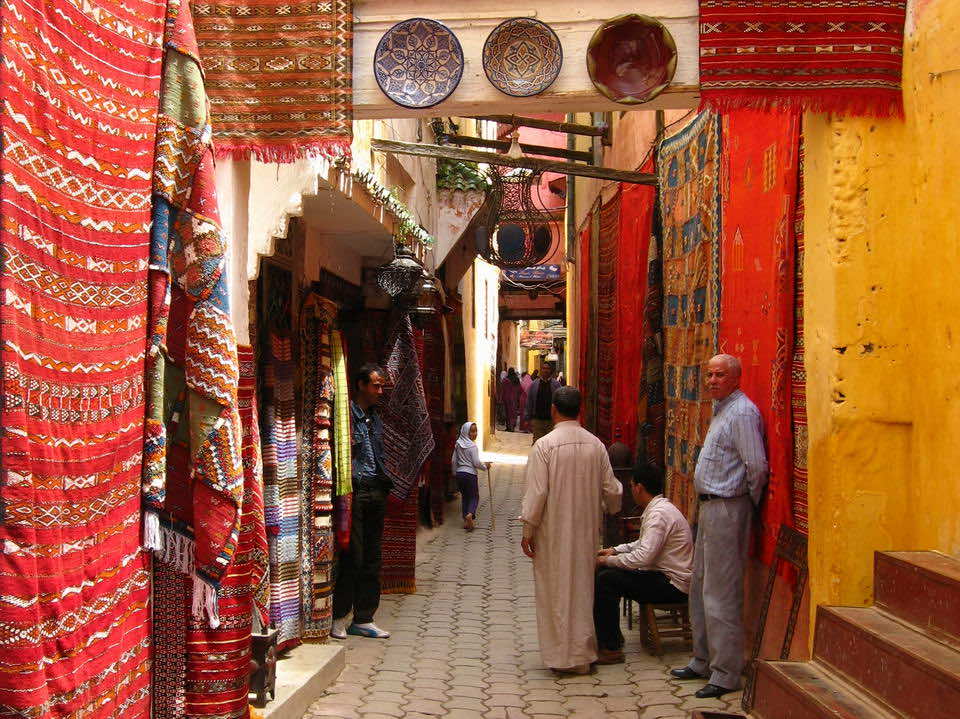
a bazar in Meknes medina
Meknes city has a strategic location on the highland plateau of north-central Morocco between Rabat and Fes which makes it a passage to many neighboring historical monuments and landscapes. The climate is very nice. Spring and summer are favorite seasons for visitors since they display the most charming weather which paves the way for local festivals promoting the diversity of Meknes’ culture.

Meknes is known by its abundant water resources due to its location near the middle Atlas that is considered the biggest tank of water in Morocco; in addition to the richness and fertility of its lands. Such geographical qualities have made it an attractive to investment, namely in the agriculture sector.
Meknes is an agricultural city par excellence. The plantations of olive trees are one of its characteristics as well as its olive oil. The large rich fields of grapes are highly remarkable in Meknes and most of them are exported to Europe thanks to their good quality. Such geographical advantages make Meknes qualified to host the international exhibition of agriculture. The latter covers 100,000 square meters and welcomes professionals and exhibitors from all over the globe. The rationale is to showcase the latest innovations that may lead to improving the agricultural field locally and globally.
Landmark Monuments
 Bab Al-Mansour is one of the most remarkable gates in Morocco and even in North Africa. It was built in the reign of Moulay Ismail by a Christian engineer who had converted to Islam. It was decorated by Moulay Abdllah (the son of Moulay Ismail).
Hedim Square is a large square  located  in the heart  of  the old Meknes medina. It was established by Moulay Ismail for the exposition of his army. It  has seen many changes and it has become now a place for cultural activities animated by story tellers to entertain tourists.
Moulay Ismail Mausoleum in Meknes
The Mausoleum of Moulay Ismail displays a panoramic view of the art of architecture ranging from different inscriptions and trappings to mosaics surrounded by Quranic and poetic words written in beautiful Arabic hand-writing. What is more attractive in the Mausolem is the dome in which there is the the tomb of Moulay Ismail and his kin.
The prison of Qara is a huge  underground prison built in the reign of Moulay Ismail by a Portuguese architect, Cara, who gained his freedom after constructing it. Such an immense prison   was reserved for violators law and opponents of the kingdom. Recently, it’s known many reforms and they are cherished by many visitors. Near the prison of Qara there is the dome of ambassadors that was a place for receiving foreign ambassadors by Moulay Ismail.
Sahrij Souani is a cistern that measures 300 ×148 meters with a depth of more than 3 meters. It is surrounded with a great ancient granary used for storing grains in the reign of Moulay Ismail. Though the later was affected by the earthquake that struck Meknes in 1755, it is still maintains its impressive architectural landmarks.
The Museum Dar AlJamai was built in 1882 during the reign of Moulay Alhasan I and it was the residence of his minister Mohamed Ben Al Arabi Al Jamai. It exhibits a collection of fascinating arts that mark the diversity of the local culture.
Moulay Idriss Zerhoun, 20 km from Meknes,was the capital of Moulay Idriss I the founder of the Idrissid’s state. It is surrounded by mountains. Such  glorious city was established on two hills and fought against the Roman invasion and won. Its history and attractive landscapes mesmerize visitors.
Volubilis, Meknes
Walili (Volubilis): (About 23 km from Meknes and near Moulay Idriss Zerhoun)
Its history goes back to 40 A.D. It is an amazing tourist site that invites countless visitors yearly. Really, it is a great memorial of the Roman civilization.
The Old Medina
Meknes, old medina (old city)
The old medina in Meknes is a lively museum for tourists since it incarnates the major historical landmarks of the city.

What is appealing while visiting the old medina are its crafts. They are symbolic capital of the city that epitomize its originality and specificity. Souks (markets) are popular in the old medina and they are a target for buying traditional clothes and jewelry. They are distinct by their narrowness and most of times overcrowded. In the centre of the old medina there is the Medrasa Bou Anania, a stunning quranic school that goes back to the 14th century. The latter is located near Jamaa Lakbir (the big mosque) which adds a pinch of  spirituality to the old medina.
The New city (Hamria)
The planning of the New city was done by the architect Henri Prost in 1914 during the French occupation. It was reserved as a residence for the French and the European settlers, designed with the European architectural criteria. Hamria displays the landmarks of the modern city: hotels, restaurants, night life, cinema, theatre, cafes, cultural clubs, etc. It is the embodiment of the process of modernization that Moroccan society is trying.
Art and Culture
Meknes art is very rich and varied and it mirrors the deeply rooted traditions, rituals and the way of life of the population. Meknes is known by its classical music that is transmitted from the founding fathers to the coming generations.
Andalusian Music: it is a classical music that displays the rich legacy of Muslim Andalusia carried by the first wave of Arab immigrants to Andalusia. The orchestra is composed of many musicians playing on classical instruments: violins, Rabab , tambourines, lutes and they sing in standard and Moroccan Arabic.
Malhoun Music
It goes back to the 12th century and was influenced by the rhythms of Andalusian music and popular songs that gave birth to what is called ‘Quasida’, a long narrated rhythmic story. Its serenity and smoothness have been a target for many artists and craftsmen who seek refuge to transcend the constrains of daily boredom. It employs poetic diction mingling standard and Moroccan Arabic to tackle both religious and profane subjects.
Aissawa music in Meknes
Aissaoua Music originated from the religious fellowship Aissaoua founded by a pious scholar Mohammed Ben Aissa in the 16th century. He is considered the spiritual father of Tariqa (Sufi fellowship) and becomes for posterity the Sheikh lkamal (the perfect man). Aissaoua music is the major art that characterizes Meknes city and it inspires many musicians by its special rhythms and instruments.
To promote the legacy of its art and culture, Meknes city organized last year the first edition of the National Festival of Aissaoua Art. The festival was an opportunity to celebrate the diversity and the artistic richness of such local distinct culture.

Islamic Clothing of Morocco


Islamic Clothing of Morocco


Costumes differ from town to town in Morocco being influenced by Spanish, Turkish, Balkan, Berber and French traditions. The Moroccan men wear djellaba, a long, loose, full sleeve garment with a hood. A red cap called tarbouche or Fez is worn on special occasions. Also, most Moraccan men and women wear soft, heelless, leather slippers called Baboosh, yellow in color. High-heeled sandals with silver or gold tinsel are also popular among women. The djellabas worn by women are dominated by bright colors and ornate patterns woven by hand, whereas those worn by men are plain in neutral colors. A hoodless type of djellaba called Kaftans is also popular. Despite the high costs of the traditional dress, Moroccans are strongly attached to their dress and purchase at least a new pair every year.


morocco culture,moroccan food,morocco food,moroccan cuisine,morocco beaches,moroccan meal,beaches in morocco,moroccan culture,hercules cave,hercules cave morocco

Cooking Classes in Morocco


Cooking Classes in Morocco

Your cooking vacation in Morocco will introduce you to the diversity of flavors that define Moroccan cuisine.  The most common element is the combination of the sweet and the savory – meats such as lamb prepared with dried fruits such as apricots, raisins, and dates.  Moroccan food is full of spices, but is not spicy.  Cinnamon, ginger, saffron and paprika are staples in the cooking of Morocco.  The tagine – the conical-shaped earthenware vessel used in traditional cooking – lends its name to many of the dishes.  Couscous, light and fluffy semolina pasta, is both a side dish and a base for vegetable or meat stews.  As part of your Moroccan culinary tour you can add a cooking class focused on learning how to hand-roll couscous with the Berber women.  Your cooking class vacation in Morocco will teach you how to combine these exotic ingredients into a mouth-watering feast that you can recreate at home.


morocco culture,moroccan food,morocco food,moroccan cuisine,morocco beaches,moroccan meal,beaches in morocco,moroccan culture,hercules cave,hercules cave morocco

Moroccan Handicrafts and Souks


Moroccan Handicrafts and Souks


Larger cities have medinas and souks are central marketplaces, usually in the center of the medina. Larger souks, such as those in the Fez medina, house shops of textiles, spices, furniture, rugs, and jewelry. Moroccan artists and artisans ply their wares and talents daily. Morocco, which has been known for centuries for its craftsmen, sell leather goods and carpets, shoes, and even spices of the highest quality.

Moroccan women have been making rugs and carpets for millennia. Moroccan rugs are available now only to those who are willing to pay the price. Making of one rug can a month or more than a year to complete. Moroccan rugs are famous for quality, both in workmanship and colors. Prices often depend on whether the rug is woven or knotted. Knotted rugs take much longer to complete and are much more expensive. Berber carpets are probably the most famous. Carpets from those living in the High Atlas Mountains people are known for rich warm colors. Carpets made by the people south of Meknes have more detailed weavings.

Objects made of leather are another famous Moroccan craft item. Leather working in Morocco had been going on as long as carpet weaving. Different areas of Morocco are skilled at making different items. In the Rif Mountains, craftsmen make satchels, shoulder bags, belts and leather-covered earthenware. Marrakech artists are known for leather clothing and camel saddles. Other things such as banana-yellow babouches (slippers) and ottomans are also quite popular and available in most medinas.

Painted boxes and bowls are but a couple of the examples of woodwork that is available in such areas such as Essaouira. Different areas are known for different things made of wood. Around Essaouira, items are made from burls of the aromatic thuya tree.  Beautiful bowls and boxes as well as furniture are carved from this wood. Painted boxes and carved wooden latticework are found in the Fez area. Marrakech has larger things such as painted or sculptured panels, chests that have inlaid designs or elaborate doors.

Jewelry making is another well known Moroccan handicraft.  Earlier in Moroccan history, the Jewish people were the jewelry makers. They passed the craft down through the ages. Today, there are many skilled artists that work with gold and silver. Like woodworking, different kinds of jewelry are made in different areas of Morocco.

Marrakesh was the major stop in Morocco for caravan routes completing the trans-Saharan Journey. Jewelry in Marrakech has the influence found in sub-Saharan Africa. Tangier and Fez have jewelry that shows the Andalusia designs, while enamelware is most popular in Essaouira. In the rural areas, silver is most valued. The Berber peoples in the mountains work their jewelry from this precious metal. Here silver is made into necklaces, bracelets, anklets and forehead diadems. Berbers, also make daggers inlaid with precious stones, trays and tea services along with silver boxes and pots.

Moroccans make basket ware from palm trees. Colorful hats, trays, and straw boxes are made in very village in the country.

Ceramics are another famous craft item. Clay jars; vases, plates and cooking dishes called tagines have been made for centuries in Morocco. Each area of the country is known for a certain type of ceramic or color. Zagoran pottery has a greenish finish, probably influenced by the green of the oasis.  Sale has colored glazing on its decorative pottery. Fez has the most famous pottery that uses many colors with silver inlay.  Berber craftsman near Marrakech make ochre-colored ware. Ceramic tiles are the origin of the Moroccan mosaics which are famous. Many cooperatives have been formed to make these ceramic tiles. The cooperatives in Fez are the most well known. Elaborate patterns are created by these groups.

These aforementioned wares are only but a few that can be found in Morocco. Craftsmen work in gold, with stones, and use copper and iron. Embroidered textiles are another type of handicraft famous in Morocco, along with hand woven textiles.  A visit to a medina or souk would show many things made in Morocco.

morocco culture,moroccan food,morocco food,moroccan cuisine,morocco beaches,moroccan meal,beaches in morocco,moroccan culture,hercules cave,hercules cave morocco

Food Traditions in Morocco


Few people outside of cities have clocks in Morocco, instead scheduling their days around the five calls to prayer and the five daily meals. Yes, there are five. Breakfast comes early in the morning, followed by a second breakfast at mid-morning. Lunch is served at midday, and in the late afternoon there is a break for tea and bread. Finally, dinner is served in the late evening.

These rhythms are predictable and universally held across the country. What you can expect to find on a Moroccan table at any one of these meals is also not too hard to guess. Morocco has a long and proud culinary tradition, and families rarely stray far from the basics. Luckily, the basics are universally delicious.

Bread – If a Moroccan home is without bread, something is deeply wrong. Bread is the one true staple of Moroccan diets, and girls learn how to bake their family’s bread at an early age. While breads vary from family to family, most are circular flatbreads and are baked using whatever grains are grown locally. Breakfast usually includes bread with butter or jam, and bread is also integral to other meals and snacks throughout the day.

Tea – The other mainstay of the Moroccan diet, tea is the national drink and revered as such. This isn’t any tea you’ve likely had before, though; Moroccan tea is brewed in a very certain way. Starting with gunpowder style green tea, masses of sugar and fresh sprigs of mint are added to the steeping brew, creating a syrupy-sweet concoction that is never far from any table. It is served with breakfasts and tea breaks, and as dessert after lunches and dinners. While visitors often struggle with the sugar content, Moroccans will be impressed if you take the tea as they do. It’s something to try at least once—if you have a real sweet tooth, you’ll feel right at home.

Tagine – The name of this dish actually comes from the conical clay pot in which it is cooked and served. Tagine is a thick stew of vegetables, whatever may be on hand or in season, with a bit of meat added in the middle. The dish is served hot, and presented in a single dish to the table of diners. Moroccan meals are a communal affair, and the tagine is shared from the single pot, with each diner keeping to their own ‘triangle’ of the dish. Rather than use spoons or forks, tagine is eaten with bread. Tearing a small piece off a larger slice, the idea is to use the bread to soak up some of the broth while also scooping up some of the vegetables and meat. Tagine is usually eaten for both dinner and lunch and is the standard meal within the Moroccan diet.

Couscous – When people think of Moroccan foods, they often think of couscous. Moroccans are proud of their de-facto national dish, and are very particular about its preparation. Rather than boiling the dried couscous in a covered pot as is often done in North America, the couscous is placed into a steamer above a pot of boiling vegetables. The couscous is steamed this way for an hour or more, periodically fluffed by hand. When the couscous is ready, it is served in a single large plate, the vegetables poured over the top. As with tagine, couscous is eaten by hand—a difficult skill for visitors to develop. Because of the labor-intensive nature of its preparation, couscous is seen more as a special occasion dish than a daily staple. Many families have couscous each Friday (the holy day), as well as in honor of guests or special events.


morocco culture,moroccan food,morocco food,moroccan cuisine,morocco beaches,moroccan meal,beaches in morocco,moroccan culture,hercules cave,hercules cave morocco

Traditional Handicrafts of Morocco


If there is but one travel tip Journey Beyond Travel can impart before your Moroccan adventure, it would be this: pack light. After all, the less you pack, the more room you’ll have for the endless number of crafts and souvenirs you’re bound to pick up along the way!

Morocco is a treasure trove of breathtaking landscapes, dynamic colors, and amazing diversity, all of which comes through in its art. Even if you think you’re not the type to get weighed down with trinkets, be prepared; your first glimpse of a Tafraouti slipper may convince you otherwise.

Moroccan handicrafts are as diverse and unique as the country itself, and the perfect memento of Fes will be altogether different from what jogs your memory back to Essaouira. What’s more, what you find will truly be in the spirit of the place. After all, Morocco has not fallen prey to mass-produced goods. Indeed, almost everything you see will have come from just a few yards away, where traditional artisans still ply their trade in small workshops and community cooperatives.

The following are just a few of the goods Morocco has on offer:

Slippers – Moroccan footwear, often called babouches, is handmade from locally produced leather. While they are ubiquitous throughout the country, Fes is the place to find some truly unique and well-made slippers. The famous Fes tanneries supply the raw materials, and you can watch as master craftsmen sew their latest creations in the small shops that line the medina alleyways. If you stay further south, Tafraout is also known for its footwear. However, unlike the more monotone Fes variety, Tafraouti slippers are embroidered in bright, almost psychedelic patterns.

Rugs – Marrakech and Fes are both excellent places to hunt down the perfect carpet. A guide can help you pick out the different patterns, colors and sizes, as well as give you some background on the origins of the many symbols and motifs in use. Don’t rush past smaller cooperatives, though. Many small towns have carpet and weaving co-ops that would happily show you their wares. In fact, if you already have something in mind, these smaller outposts are often happy to make a custom rug to order.

Lanterns – Moroccan lanterns are wonderful pieces of craftsmanship and can truly dazzle at night. Marrakech is home to most of the country’s lantern makers, but you can find them almost anywhere. Shop assistants can often help you track down certain shapes, sizes and colors, so be open and honest about what you’re looking for. Even if they don’t have it, odds are they know someone who does!

Wood Carving – This is where Essaouira truly shines. While wood carvers ply their trade throughout Morocco, there is something special to be said about the twuia wood found only on the south coast, and locals have been making good use of it for centuries. From larger chess boards and plates, to small boxes and children’s toys, sculptors have perfected the technique of drawing the beautiful from the seemingly mundane, and few visitors leave without at least a small trinket to remind them of the relaxed Moroccan sea coast.

Pottery – Moroccan pottery can vary wildly from place to place, but a few cities have truly put their mark on the ceramics trade. Safi is perhaps the most notable ceramic city, with large markets dedicated to their sale as well as a wide variety of shops and styles. Safi also offers a more relaxed atmosphere for shopping, and since the pottery is made onsite, you’re often dealing with the very men who created the plate in your hands. Outside Zagora, Tamegroute is known for its unique green-glaze pottery.

All this is to say nothing of the natural oils and dyes, knitwear, cooking supplies, tapestry, leather and innumerable other finds you’ll come across as you wander through the souks. Like so much in Morocco, you’ll get the most from your market day with an open mind and a little curiosity. Be prepared to take your time, and be open to whatever strikes your fancy!


morocco culture,moroccan food,morocco food,moroccan cuisine,morocco beaches,moroccan meal,beaches in morocco,moroccan culture,hercules cave,hercules cave morocco